English
Moderator:To begin our discussion, Mr. Koike, could you share the purpose and background behind the establishment of the company?
Koike (CEO):
Certainly. At its core, we are a firm that bridges executive management and business operations. Our mission is to transform managerial decision-making into something “faster,” “more accurate,” and “directly linked to execution,” ultimately maximizing corporate value.
Specifically, we integrate three domains—Finance (financial and management accounting),
Tax, and Marketing (business operations)—into a single framework. For each initiative, we visualize both “execution value” and “cash impact” within one unified model.
Moderator:So the goal is to accelerate decision-making.
Koike (CEO):
Exactly. We provide the foundation for CFOs, COOs, and CEOs to engage in integrated discussions and make aligned decisions, thereby accelerating executive judgment.
Another key aspect is supporting investment decisions. In today’s environment, where companies tend to prioritize net income and after-tax profit, there is a natural inclination toward cost-cutting.
However, excessive cost reduction can lead to contraction and hinder sustainable growth.
We aim to present a balanced perspective—integrating investment and cost optimization along a single axis—so that companies avoid mere cost-cutting and instead make decisions that enhance long-term enterprise value.
We also provide support in both tax and marketing to achieve this objective.
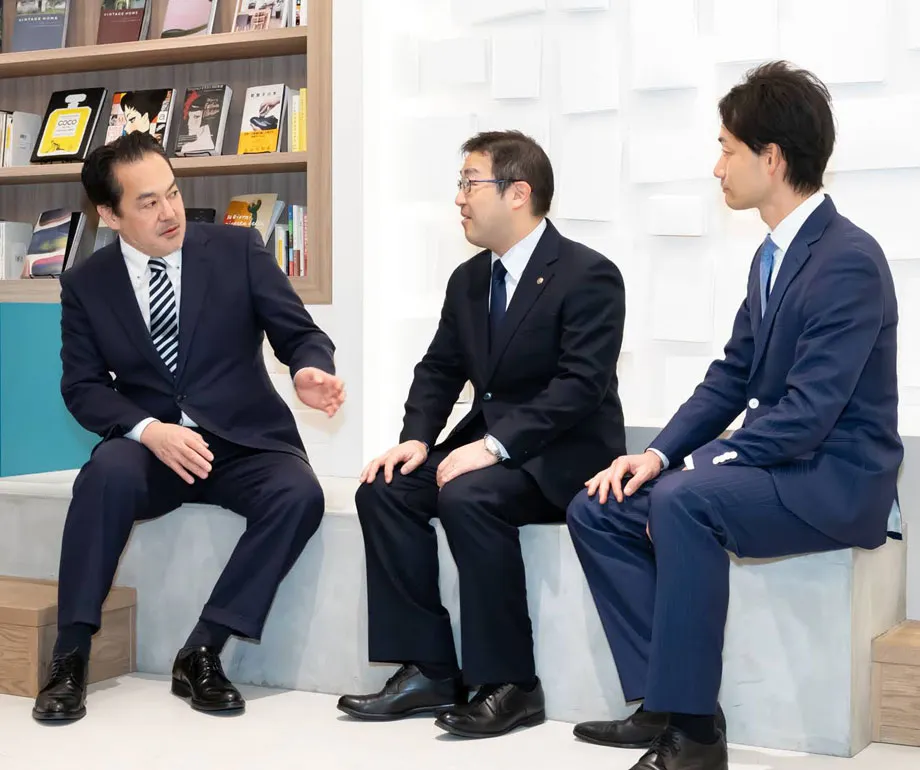
Moderator:Mr. Enami, from a CFO’s perspective, what makes management accounting truly effective for management?
Enami (CFO):There are three essential elements: future orientation, real-time responsiveness, and a common language.
First, future orientation. Since management accounting exists to support decision-making, it must focus on forecasts and scenarios. Historical results provide a foundation of them,
but they should not be the endpoint. The key is linking past data to future impact and actionable measures.
Second, real-time responsiveness. The value of information lies in its timeliness. Delayed data reduces the window for action and can result in misguided decisions.
Third, a common language. Management accounting often reflects only a financial perspective. Instead, KPIs must resonate with both management and operational teams,
enabling decisions to be made using a shared understanding.
Moderator:So the “common language” aspect is critical.
Enami (CFO):
A useful analogy is a car navigation system. Drivers do not need to know how long they have already driven (past data); they need to know the estimated arrival time (future data). With timely information, they can decide whether to change routes.
Passengers, viewing the same information, can also participate in decision-making. Management accounting should function in the same way.
Moderator: Mr. Watanabe, could you explain the role of tax within this integrated approach?
Watanabe (Tax Advisor):
As a tax professional embedded in the FP&A process, my goal is to help companies achieve both sound management decisions and sustainable cash generation. There are two key points.
First, we develop scenarios based on after-tax cash, fully incorporating tax implications. Given the significant burden of corporate and consumption taxes, it is essential to visualize the amount of cash available after tax at an early stage.
Second, we address tax considerations in investment and business decisions. Improper tax handling can result in substantial future liabilities. By identifying potential tax impacts in advance—including preferential tax treatments—we enhance the quality of decision-making. This is
particularly critical in complex areas such as M&A and business succession.
Koike (CEO):
In many organizations, FP&A departments submit KPIs and data, yet executive decision-making remains slow. The reason is that KPIs often function merely as account confirmations rather than true management drivers. There is rarely a clear guideline on how to interpret KPI movements.
Our solution is to integrate Finance (management and financial accounting), Tax, and Marketing into a cohesive framework. We structure a clear cause-and-effect narrative—from revenue to profit to cash—and provide decision-making rules for responsible leaders.
With our CEO, CFO, and Tax Advisor collectively bringing deep expertise in these areas, we have accumulated substantial practical know-how. Ultimately, we aim to help companies transform numbers into a strategic weapon.
Marketing, often categorized simply as advertising or promotional expenses, is in fact a driver of customer acquisition and brand equity. When performance declines, marketing budgets are often the first to be cut—but whether they should be cut requires integrated financial, tax, and
management analysis. Our strength lies in optimizing investments through this trinity approach.

Enami (CFO):
Our size is one of our strengths. Being small allows us to remain agile and responsive. When a client shifts direction, we can quickly realign objectives and mobilize stakeholders.
Additionally, we possess hands-on management accounting experience. While large consulting firms may lack operational depth, we understand internal PMO structures, on-the-ground dynamics, and stakeholder engagement. This ensures our outputs are practical and implementable.
Watanabe (Tax Advisor): I agree. Having worked closely with numerous companies, particularly SMEs, we understand how real-world decisions are made. Tax has a strong defensive component, and by balancing offensive marketing with defensive tax risk management, we provide a comprehensive approach. Moreover, tax audits may occur years later, so preparing for future liabilities is essential.
Koike (CEO): One of our core strengths is delivering Quick Wins—tangible, short-term execution value. In finance, this includes renegotiating borrowing terms, reducing interest costs, improving cash flow, optimizing the cash conversion cycle (CCC), and evaluating surplus capital deployment and investments. In marketing, we conduct channel-specific ROI analyses, optimize budget allocations, and visualize how advertising and promotional spending impact financial performance. Beyond Quick Wins, our ultimate objective is integrated organizational design—aligning corporate strategy, business strategy, FP&A, project management, and governance. We strive to create an environment where CEOs, CFOs, and COOs operate within a shared structure and make immediate decisions using a common language.
Enami (CFO): As AI continues to permeate business processes, numerical analysis and reporting will become increasingly automated. Therefore, we must cultivate a culture and talent base capable of making strong decisions. Even in an AI-driven world, the human element of effective decision-making will retain its value.
Koike (CEO): Many organizations lack alignment in purpose and language. We integrate these elements to create a shared framework. “We do not need unusable numbers—we transform them into actionable ones.” Cash flow, in particular, will become increasingly critical across PL, BS, and CS statements. Integrating tax into this framework enhances our value proposition.
Watanabe (Tax Advisor): Even among SMEs, leaders who focus on cash tend to achieve stronger growth. The integrated model of offense (marketing), effectiveness (management accounting), and defense (tax) will become increasingly essential.
Koike (CEO):
To reiterate, our mission is clear:
Through the trinity integration of Finance, Tax, and Marketing, we support the CFO’s accurate financial oversight, reinforce the COO’s operational execution based on business realities, and enable the CEO’s effective and timely decision-making.
This is both our purpose and our goal.
Moderator:We look forward to the continued evolution of FP&A JAPAN. Thank you all for your time today.